
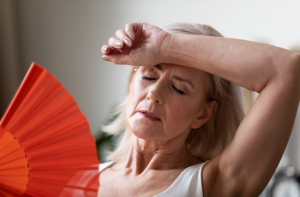
If you ever wondered how I come up with topics to write about, it’s usually out of patient or personal interest. Sometimes it seems patients and friends are suddenly asking me about a certain topic. Sometimes it is that things keep popping up on social media feed, and sometimes it’s out of personal desperation. This post is a combo of all of those things. How can I be menopausal? I was just a teenager, and my mom was going through this, lol.
It is common knowledge that estrogen is the most common female hormone and that it decreases as women age. But how much? And how does it impact the largest organ in our body – our skin?
First let’s review a little about estrogen. The most prominent and potent form of natural estrogen is estradiol, with estriol and estrone being less prominent. Estradiol levels peak at age 20-30 and reach consistently low steady levels starting around age 50. For the simplicity of this article, we will discuss “estrogen” as a whole without differentiating between the various types of estrogen.
How quickly does estrogen decline as we age? Studies show that estrogen declines by 2% per postmenopausal year. Yes, the clock starts ticking when menopause starts, not necessarily chronological age.
Menopause is marked by 1 year of menstruation cessation, but hormonal changes begin as early as 2-8 years prior in a period known as perimenopause. The average age of menopause in America is 51, and women spend almost one third of their lives in this hormonal replete stage.
Menopausal skin symptoms follow symptoms of aging with skin thinning, lower collagen levels and elasticity, dryness, reduced blood flow, reduced wound healing and a decrease in overall skin vitality both in appearance and function. One study showed that collagen decreased by 2% per year for the first 15 years of menopause.
Skin changes in menopause are not surprising as estrogen produced by the ovaries ceases altogether. However, some small amounts of estrogen continue to be made in the skin after menopause but decrease with time as well. In addition to reduced estrogen levels, levels of estrogen receptors, essential for estrogen function, also decrease with time. What are menopausal women to do about all these changes?
Unfortunately, studies looking at both topical and oral supplementation of estrogen are limited in scope and results are not very promising overall. Oral estrogen supplementation carries the risk of increases cancer, so its use for skin aesthetics and function are often outweighed by its risk. Plus, studies have shown that for estrogen supplementation to be effective for skin changes it must be started near the onset of menopause.
Social media has increased interest in using topical estrogen creams, originally prescribed for vaginal use, to improve skin health and aesthetics. However, there are no studies that have evaluated long term safety or efficacy of these creams, and generally extensive use on the skin is not recommended due to increased risk with systemic effects. In our next article, we will review some of the commercially available estrogen and estrogen like compounds currently marketed for anti-aging.
Until then, aging is impacted by more than our hormones. The top things that we can change to impact aging is to stop smoking and sun exposure.

















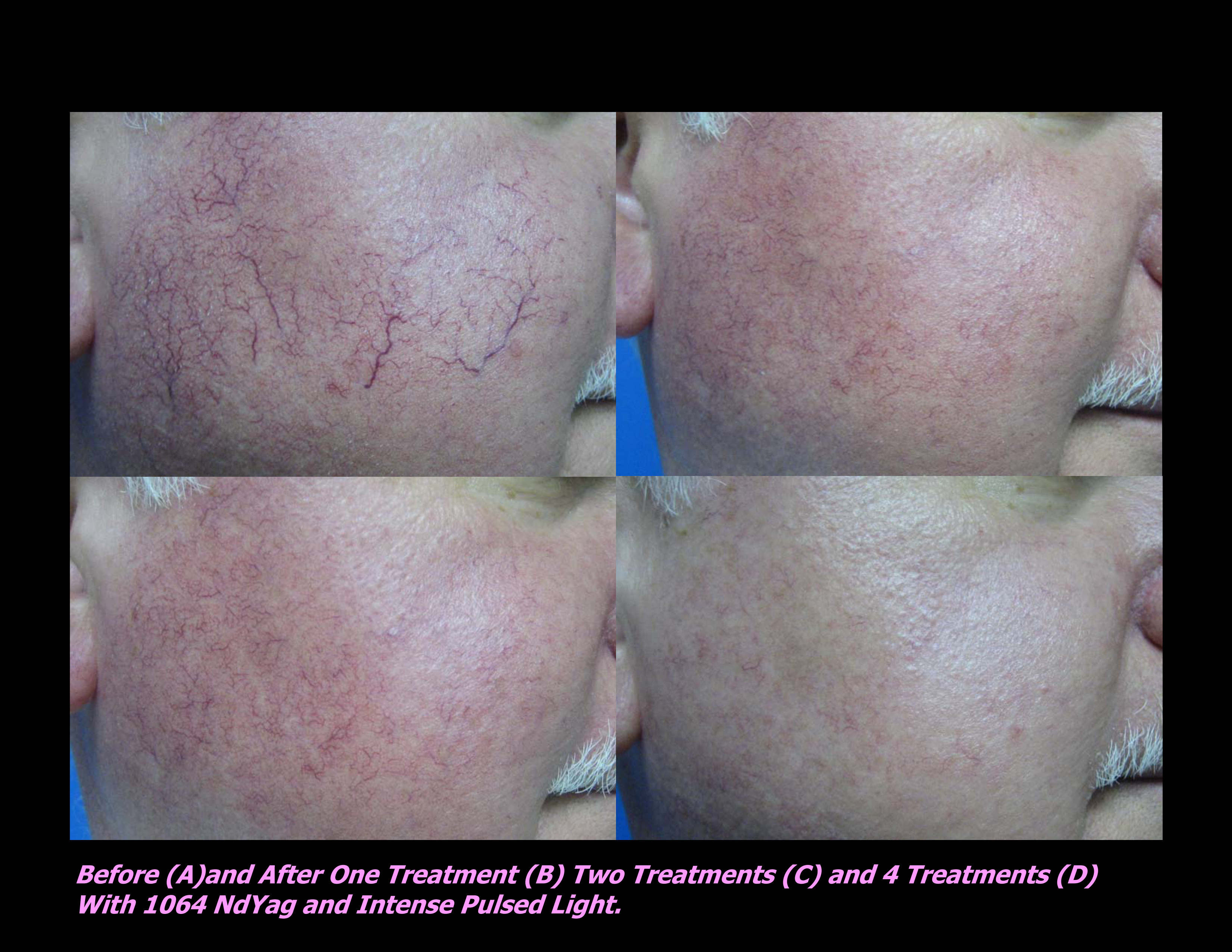
 Laser Vein Reduction Treatments



 DP Dermaceutical Products