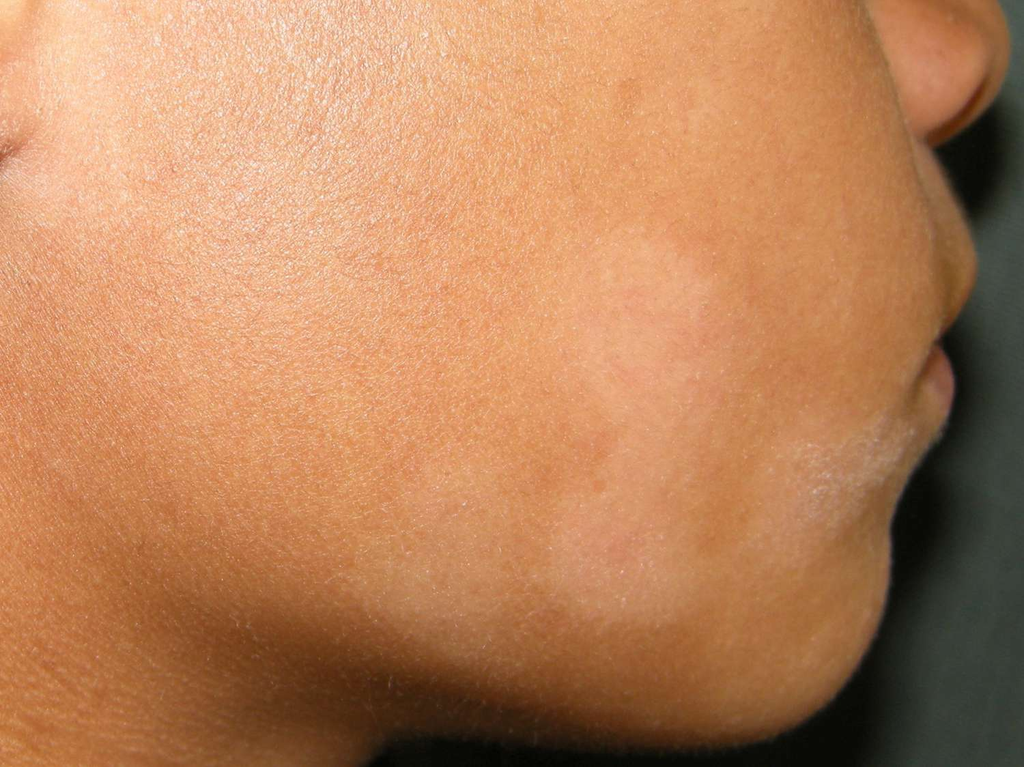
White spots on cheeks of kids – Pityriasis Alba
There are some skin conditions that tend to show up seasonally. Pityriasis alba is one of them, usually the most pronounce at the end of summer. Let’s learn more!
In dermatology the term “Pityriasis” usually refers to a skin condition characterized by by fine flaky skin. In pityriasis alba, it’s a little confusing because often the discoloration is what is noticed by patients.
Pityriasis alba generally starts with a mild for of eczema most commonly on the cheeks of children. Often the eczema goes unnoticed, but when a child tans, the area of rash does not tan well. This is because the inflamed skin often will not tan as well. Another name for this phenomenon in other skin conditions is post-inflammatory hyperpigmentation. This is more noticeable in patients with darker skin and those who tan well.
Unfortunately, once the skin is discolored there isn’t much to do to fix it. The tan will have to fade. Once the tan fades completely, the next season they will likely tan normally. So, for kids prone to this condition it is important to treat early at the eczema stage because once the discoloration occurs it often takes 3-4 months or more for the tan to fade.
If your child is prone to pityriasis alba what can you do?
Use gentle and nourishing cleansers and moisturizers. For patients with eczema, put simply, their skin barrier needs nourished and protected. Using a nourishing cleanser and moisturizer is the most important step. I usually recommend Cetaphil Eczema Restoraderm Cleanser and Moisturizer.
Treat any active pink eczema patches. For this I usually prescribe Elidel ( generic pimecrolimus)